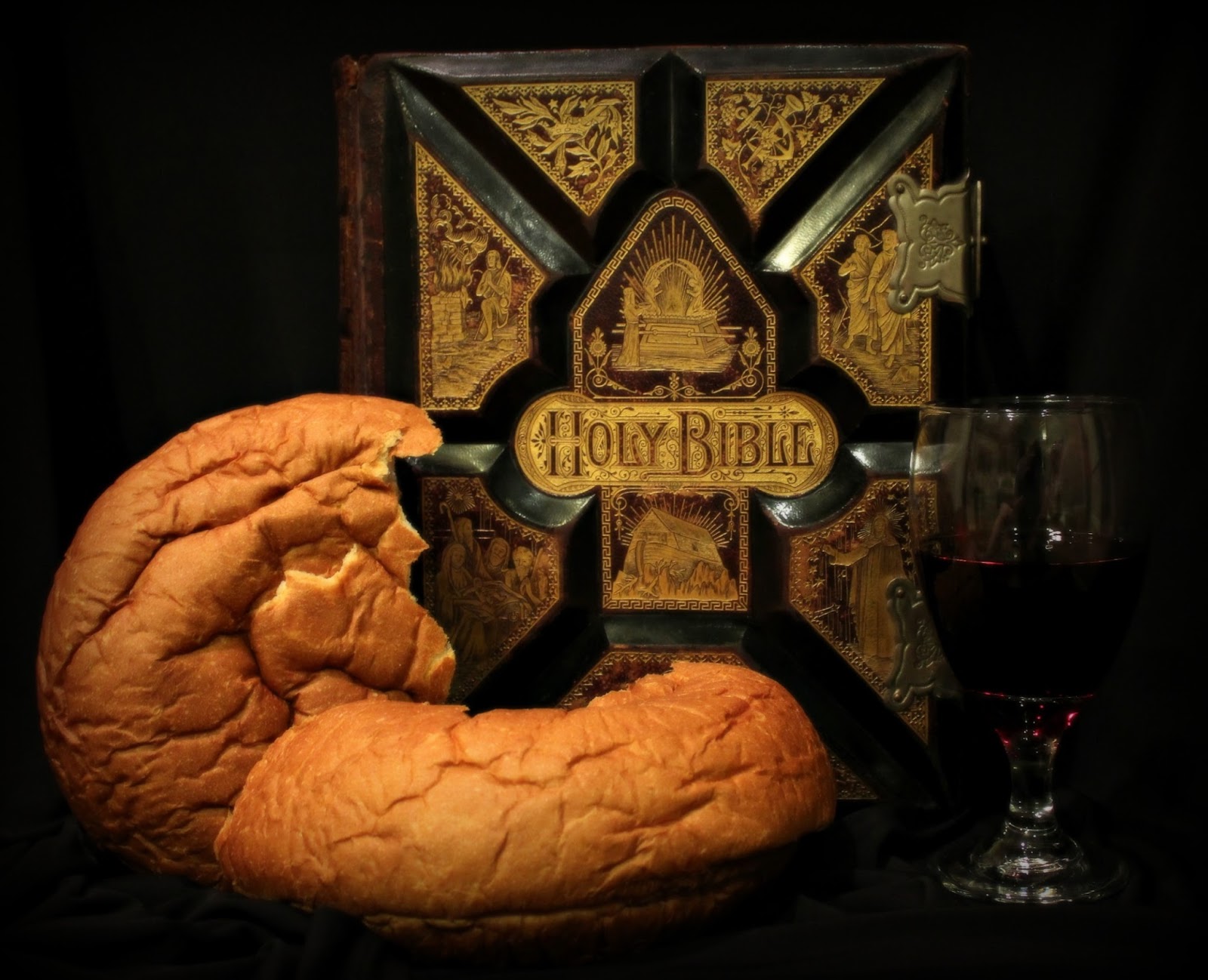
An excerpt from John Knox's treatise A Vindication of the Doctrine that the Sacrifice of the Mass is Idolatry (1550)
Let no man intend to excuse the Mass with the pretext of the Lord's Supper. For now will I prove that therewith it has no congruence, but is expressly contrary to it; and has taken the remembrance of the same out of mind. And further, it is blasphemous to the death of Jesus Christ.
First, they are contrary in institution. For the Lord's Supper was instituted to be a perpetual memory of those benefits which we have received by Jesus Christ, and by his death. And first we should call to mind in what estate we stood in the loins of Adam, when we all blasphemed the majesty of God in his face.
Secondly, that his own incomprehensible goodness moved him to love us most wretched and miserable, yea, most wicked and blasphemous and love most perfect compelled him to show mercy. And mercy pronounced the sentence, which was that his only Son should pay the price of our redemption. Which thing being rightly called to memory in the present action of the Supper, could not but move us to unfeigned thanksgiving unto God the Father, and to his only Son Jesus, who has restored us again to liberty and life. And this is it which Paul commands, saying, "As often as ye shall eat of this bread, and drink of this cup, ye shall declare the Lord's death till he come" (1 Cor. 11:26). That is, you shall laud, magnify, and extol the liberal kindness of God the Father, and the infinite benefits which you have received by Christ's death.
But the Mass is instituted, as the plain words thereof and their own laws do witness, to be a sacrifice for the sins of the quick and the dead: for doing of the which sacrifice, God is bound not only to remit our sins, but also to give unto us whatever we will ask. And that shall testify diverse Masses celebrated for diverse causes: some for peace in time of war, some for rain, some for fair weather; yea, and (alas, my heart abhors such abomination!) some for sickness of beasts. They will say, they severally take prayers for obtaining such things. And that is all which I desire they say; for the obtaining such vain trifles, they destinate [appoint] their whole purpose, and so profane the sacrament of Christ's body and blood (if that were any sacrament which they abused so), which should never be used but in memory of Christ's death. Then should it not be used to pray that the toothache be taken away from us, that our oxen should not take the lowing ill, our horse the spavin or farcy [diseases], and so of all manner of diseases for our cattle. Yea, what was it wherefore you would not say Mass, perverse priests? But let us hear more.
The Supper of the Lord is the gift of Jesus Christ, in which we should laud the infinite mercy of God. The Mass is a sacrifice which we offer unto God, for doing whereof we allege God should love and commend us.
In the Supper of the Lord, we confess ourselves redeemed from sin by the death and blood of Jesus Christ only. In the Mass, we crave remission of sins yea, and whatsoever thing we list by working of that same work, which we presently do ourselves. And herein is the Mass blasphemous unto Christ and his passion. For insofar as it offers or permits remission of sins, it imputes imperfection upon Christ and his sacrifice; affirming that all sins were not remitted by his death, but that a great part are reserved to be purged by virtue and the value of the Mass. And also it is injurious unto Christ Jesus, and not only speaking most falsely of him, but also usurping to itself that which is proper to him alone. For he affirms that he alone has, by his own death, purged the sins of the world; and that no part rests to be changed by any other means. But the Mass sings another song, which is, that every day, by that oblation offered by the priests, sin is purged and remission obtained. Consider, Papists, what honour your Mass gives unto Christ Jesus!
Last, in the Supper of the Lord, we grant ourselves eternal debtors to God, and unable any way to make satisfaction for his infinite benefits which we have received. But in the Mass, we allege God to be a debtor unto us for oblation of that sacrifice which we there presently offer, and dare affirm that we there make satisfaction by doing thereof, for the sins of ourselves and of others.
If these precedents be not contrary, let men judge with indifference [impartiality]. They differ in use; for in the Lord's Supper, the minister and the congregation sat both at one table no difference between them in preeminence nor habit, as witnesses Jesus Christ with his disciples, and the practice of the apostles after his death. But in the papistical Mass, the priests (so they will be styled) are placed by themselves at one altar. And I would ask of the authority thereof, and what scripture commands so to be done. They must be clad in several habits,[42] whereof no mention is made in the New Testament. It will not excuse them to say, Paul commanded all to be done with order and decently (1 Cor. 14:40). Dare they be so bold as to affirm that the Supper of Jesus Christ was done without order, and indecently, wherein were seen no such disguised vestments? Or will they set up to us again the Levitical priesthood? Should not all be taught by the plain word?
Prelates or priests, I ask one question: You would be like the vestments of Aaron in all things. Aaron had affixed unto his garments certain bells, which were commanded to ring, and to make sound, as often as he was clad therein. But, priests, your bells want tongues; they ring not; they sound of nothing but of the earth. The people understand nothing of all your ceremonies. Fear you not the wrath of God? It was commanded Aaron that the sound of bells should be heard, that he died not. Advise with this, for the matter appertains to you.
In the Supper of the Lord all were equally participants: the bread being broken, and the cup being distributed amongst all, according to his holy commandment. In the papistical Mass, the congregation gets nothing except the beholding of your jukings, noddings, crossings, turning, uplifting, which all are nothing but a diabolical profanation of Christ's Supper. Now, juke, cross, and nod as you list; they are [nothing] but your own inventions. And finally, brethren, you got nothing, but gazed and beheld while one did eat and drink all.
It shall not excuse you to say, the congregation is participating spiritually. O, wicked Antichrists! says not Jesus Christ, "Eat of this, and drink of this; all do this in remembrance of me?" (Matt. 26:26-27). Christ commanded not that one should gaze upon it, bow, juke, and beck [nod] thereto, but that we should eat and drink thereof ourselves; and not that we should behold others do the same; unless we would confess the death of Jesus Christ to appertain nothing to us. For when I eat and drink at that table, I openly confess the fruit and virtue of Christ's body, of his blood and passion, to appertain to myself; and that I am a member of his mystical body; and that God the Father is appeased with me, notwithstanding my first corruption and present infirmities.
Judge, brethren, what comfort has this taken from us, [by them] which will that the sight thereof shall be sufficient. I would ask, first, if the sight of corporeal meat and drink does feed or nourish the body? I think they will say, "Nay." And I affirm that no more profit receives the soul in beholding another eat and drink the Lord's very Supper (as for their idolatry it is always damnable), than the body does in beholding another eat and drink, and though receiving no part thereof.
But now briefly, let this contradiction be collected [examined]. In the Lord's Supper are offered thanks for the benefits which we have received of God. In the Mass, the Papist will compel God to grant all that he asks of him, by virtue of the sacrifice, and so alleges that God should refer thanks unto him that does [the] Mass.
In the Supper of the Lord, the actors [partakers] humbly do confess themselves redeemed only by Christ's blood, which once was shed. In the Mass, the priest vaunts himself to make a sacrifice for the sins of the quick and the dead.
In the Lord's Supper, all the partakers at that table grant and confess themselves debtors unto God, unable to refer thanks for the benefits which we have received of his liberality. In the papistical Mass, the priest alleges that God is a debtor to him, and unto all them for whom he makes that sacrifice. For he does affirm remission of sins to be obtained thereby; and in that the Mass is blasphemous to Christ's death.
In the Lord's Supper, all sit at one table: no difference in habit or vestment between the minister and the congregation. In the papistical Mass, the priests are placed by themselves at one altar (as they call it), and are clad in disguised garments.
In the Lord's Supper, finally, all do eat of one bread and drink of one cup. But in the mischievous Mass, one man did eat and drink all.
Consider now, beloved brethren, what the fruits of the Mass have been, even in her greatest purity. The Mass is nothing but the invention of man, set up without all authority of God's word, for honouring of God; and therefore it is idolatry. Unto it is added a vain, false, deceitful, and most wicked opinion: that is, that by it is obtained remission of sins; and therefore it is abomination before God. It is contrary unto the Supper of Jesus Christ, and has taken away both the right use and remembrance thereof, and therefore it is blasphemous to Christ's death. Maintain or defend the papistical Mass who so list, this honour and service did all which used the same. And here I speak not of the most abominable abuses, as of buying and selling, used now of late by the mischievous priests; but of the Mass in her most high degree, and most honest garment; yea, even of the great Gaudeamus sung or said by Gregory the Great, as Papists do call him.
Let no man think that, because I am in the realm of England, therefore so boldly I speak against this abomination. Nay, God has taken that suspicion from me, for this body lying in most painful bonds, amongst the midst of cruel tyrants, his mercy and goodness provided that the hand should write, and bear witness to the confession of the heart more abundantly than ever yet the tongue spoke.
And here I call my God to record that neither profit to myself, hatred of any person or persons, nor affection or favour that I bear towards any private man, causes me this day to speak as you have heard; but only the obedience which I owe unto God in [the] ministry, showing of his word, and the common love which I bear to the salvation of all men. For so odious and abominable I know the Mass to be in God's presence, that unless you decline from the same, to life can you never attain. And therefore, brethren, flee from that idolatry, rather than from the present death.
Here would I have spoken of the diversity of sacrifice, but neither does time nor the wickedness [frailty] of my own flesh permit that I do so. I will you [to] observe, that where I say there rests no sacrifice, nor yet are there any priests; that I mean, there rests no sacrifice to be offered for sin, nor yet are there any priests having power to offer such oblations. Otherwise, I do know that all true Christians are kings and priests, and do daily offer unto God a sacrifice most acceptable: the mortification of their affections, as Paul commanded in Romans. But hereof I may not remain to speak presently.
Such doctrine as was taught in your audience, upon Sunday before noon, I will prove, as opportunity shall permit, by God's scriptures, not only unprofitable, but also erroneous and deceitful. But first, according to my promise, I will send unto the teacher the extract thereof, to add or diminish as by his wisdom shall be thought most expedient. For God knows my mind is not captiously to trap men in words, but my only desire being that you, my audience, be instructed in the verity; wherefrom dissents some doctrine taught [to] you (if truly I have collected) moves me to speak against all that may have appearance of lies and superstition.
And pray with me, brethren, that the Spirit may be ministered unto me in abun dance, to speak at all times as it becomes a true messenger. And I will likewise pray that you may hear, understand, and obey with all reverence, the good will of God, declared unto the world by Jesus Christ, whose omnipotent Spirit remain with you forever. Amen.
Give the glory to God alone.
Consider now, beloved brethren, what the fruits of the Mass have been, even in her greatest purity. The Mass is nothing but the invention of man, set up without all authority of God's word, for honouring of God; and therefore it is idolatry. Unto it is added a vain, false, deceitful, and most wicked opinion: that is, that by it is obtained remission of sins; and therefore it is abomination before God. It is contrary unto the Supper of Jesus Christ, and has taken away both the right use and remembrance thereof, and therefore it is blasphemous to Christ's death. Maintain or defend the papistical Mass who so list, this honour and service did all which used the same. And here I speak not of the most abominable abuses, as of buying and selling, used now of late by the mischievous priests; but of the Mass in her most high degree, and most honest garment; yea, even of the great Gaudeamus sung or said by Gregory the Great, as Papists do call him.
Let no man think that, because I am in the realm of England, therefore so boldly I speak against this abomination. Nay, God has taken that suspicion from me, for this body lying in most painful bonds, amongst the midst of cruel tyrants, his mercy and goodness provided that the hand should write, and bear witness to the confession of the heart more abundantly than ever yet the tongue spoke.
And here I call my God to record that neither profit to myself, hatred of any person or persons, nor affection or favour that I bear towards any private man, causes me this day to speak as you have heard; but only the obedience which I owe unto God in [the] ministry, showing of his word, and the common love which I bear to the salvation of all men. For so odious and abominable I know the Mass to be in God's presence, that unless you decline from the same, to life can you never attain. And therefore, brethren, flee from that idolatry, rather than from the present death.
Here would I have spoken of the diversity of sacrifice, but neither does time nor the wickedness [frailty] of my own flesh permit that I do so. I will you [to] observe, that where I say there rests no sacrifice, nor yet are there any priests; that I mean, there rests no sacrifice to be offered for sin, nor yet are there any priests having power to offer such oblations. Otherwise, I do know that all true Christians are kings and priests, and do daily offer unto God a sacrifice most acceptable: the mortification of their affections, as Paul commanded in Romans. But hereof I may not remain to speak presently.
Such doctrine as was taught in your audience, upon Sunday before noon, I will prove, as opportunity shall permit, by God's scriptures, not only unprofitable, but also erroneous and deceitful. But first, according to my promise, I will send unto the teacher the extract thereof, to add or diminish as by his wisdom shall be thought most expedient. For God knows my mind is not captiously to trap men in words, but my only desire being that you, my audience, be instructed in the verity; wherefrom dissents some doctrine taught [to] you (if truly I have collected) moves me to speak against all that may have appearance of lies and superstition.
And pray with me, brethren, that the Spirit may be ministered unto me in abun dance, to speak at all times as it becomes a true messenger. And I will likewise pray that you may hear, understand, and obey with all reverence, the good will of God, declared unto the world by Jesus Christ, whose omnipotent Spirit remain with you forever. Amen.
Give the glory to God alone.